 Skip to main content

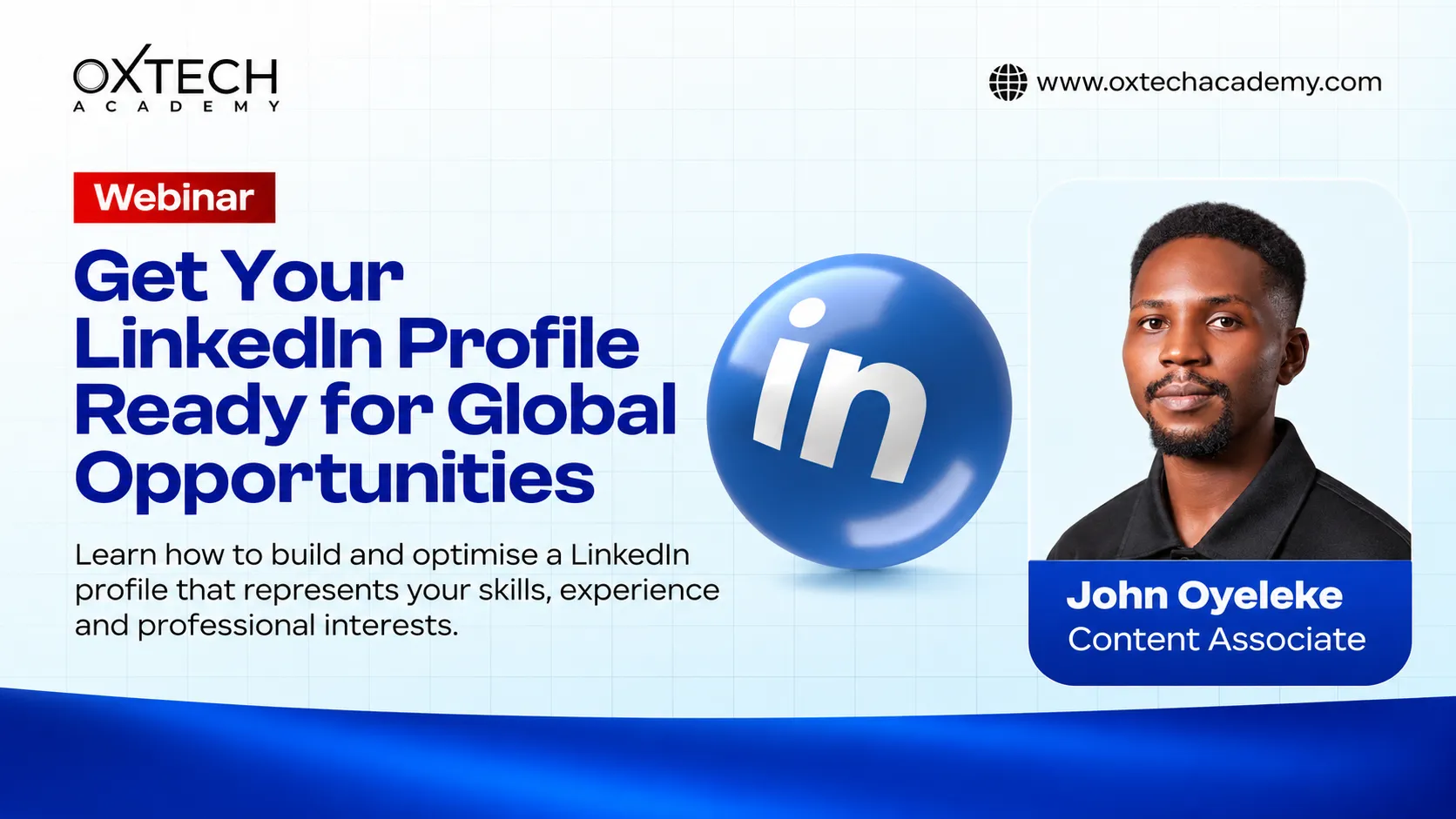
Oxtech Academy hosted a webinar on 14 November 2026, titled “Make Your LinkedIn Profile Work for You,” to help students, graduates, job seekers, freelancers, entrepreneurs and working professionals understand how to create and optimise their LinkedIn profiles.
The session, facilitated by John Oyeleke, Content Associate at Oxgital, covered the key steps involved in building a professional LinkedIn presence, from creating an account and writing a compelling profile to showcasing skills, building professional connections and using LinkedIn’s job search features.
The webinar focused on helping participants understand how to present their professional backgrounds more clearly and use LinkedIn beyond simply applying for jobs.
Understanding LinkedIn Beyond Job Applications
The session opened with an overview of LinkedIn as a professional networking platform rather than just a place to search and apply for vacancies.
Participants were introduced to the different ways people can use the platform based on their professional goals.
For students and recent graduates, LinkedIn provides an opportunity to showcase academic projects, develop skills and highlight professional interests. Freelancers and consultants can use their profiles to communicate the services they offer and present examples of their work. Entrepreneurs and business owners can build professional relationships, connect with relevant audiences and improve their business visibility.
The discussion established that having a LinkedIn account is only the starting point. A useful profile should give visitors a clear understanding of the person behind it, including their background, skills, experience and professional direction.
Building a LinkedIn Profile That Communicates Your Value
A major part of the webinar focused on the different sections of a LinkedIn profile and how each contributes to a person’s professional presentation.
Participants were guided through the importance of having a suitable profile photograph and banner, writing a clear headline, developing an informative About section and providing relevant details under Experience, Education and Skills.
Particular attention was given to the LinkedIn headline and About section because these are important parts of a profile’s introduction.
The headline should communicate what someone does, what they specialise in or the area they are developing their skills in. Rather than using a vague description such as “Looking for opportunities”, participants were encouraged to include relevant professional terms that help others understand their background.
The About section provides more room to explain this information. It can highlight a person’s experience, interests, skills, achievements and the type of opportunities they want to pursue.
The session also emphasised the importance of writing naturally and avoiding exaggerated claims or generic descriptions that do not communicate anything specific about the individual.
You Don’t Need Full-Time Work Experience to Build a Useful Profile
One of the important points addressed during the webinar was how beginners can build their LinkedIn profiles when they have little or no formal employment experience.
Students and recent graduates may assume they have nothing valuable to include because they have not worked in a full-time role. However, the session explained that there are other ways to demonstrate relevant abilities.
Personal projects, internships, volunteering, student leadership roles, freelance assignments, online courses and certifications can all provide useful information for a professional profile.
For example, someone learning frontend development could showcase a personal website, explain the technologies used to build it and describe what they learned from the process.
The emphasis was on presenting these experiences accurately. A personal project should be identified as a personal project rather than presented as paid professional work.
This allows beginners to demonstrate what they can do while being honest about their current experience.
Showcasing Work Through LinkedIn’s Featured Section
The webinar also explored how the Featured section can help users provide evidence of the skills and experience described elsewhere on their profiles.
Rather than relying entirely on written descriptions, LinkedIn users can highlight relevant work samples, portfolio links, articles, presentations, project demonstrations and other professional materials.
The examples discussed included graphic designers featuring selected design projects, content writers sharing published articles and software developers showcasing applications or technical projects.
Participants were encouraged to provide context for anything they feature. A link or document becomes more useful when visitors understand what it contains, what the individual contributed and why it is relevant.
The discussion also highlighted the need to respect confidentiality and obtain permission before sharing client or company work.
Improving Profile Visibility and Building Professional Connections
Another key area covered was how users can make their profiles easier to understand and improve their professional visibility.
The facilitator explained how relevant keywords can be included naturally in profile sections such as the headline, About section, experience descriptions and skills.
For example, someone working in digital marketing may include relevant terms such as SEO, Content Marketing, Social Media Marketing or Content Strategy, provided these accurately reflect their abilities and experience.
Participants were also introduced to LinkedIn’s public profile settings and custom profile URL, which can make it easier to share a professional profile through a CV, portfolio or email signature.
Beyond profile optimisation, the session addressed the importance of participating in the LinkedIn community. Users were encouraged to connect with relevant professionals, follow organisations within their industries, contribute to meaningful discussions and share useful work or learning experiences.
The discussion made it clear that building a professional network does not require sending connection requests to everyone or publishing content every day. Relevant connections and thoughtful participation can be more valuable than simply accumulating followers.
Using LinkedIn to Search for Job Opportunities
For participants interested in employment, the webinar included a practical guide to using LinkedIn Jobs.
The session covered how to search for specific job titles, use location and workplace filters, review experience requirements and identify vacancies that match their qualifications and interests.
Examples of job titles such as Content Writer, SEO Content Writer, Copywriter and Content Associate were used to demonstrate how searching with related job titles can help users find opportunities they might otherwise miss.
Participants were also shown how job alerts work. By saving relevant searches and enabling alerts, users can receive notifications when LinkedIn identifies new vacancies that match their selected criteria.
The facilitator also explained the difference between job alerts and the Open to Work feature. While job alerts notify users about relevant vacancies, Open to Work allows users to indicate their interest in new employment opportunities, subject to the visibility settings they select.
The session further encouraged participants to keep track of their applications and review job descriptions carefully before applying.
Staying Safe When Searching for Opportunities
As part of the job search discussion, the webinar addressed the need to identify suspicious job offers and protect personal information.
Participants were advised to verify employers through their official websites and other credible sources before proceeding with applications.
The session highlighted warning signs such as requests for payment to secure employment, demands for passwords or verification codes, unrealistic salary promises and pressure to make immediate decisions.
Job seekers were encouraged to approach unfamiliar opportunities carefully and avoid sharing sensitive information with unverified individuals or organisations.
A Clearer LinkedIn Profile Starts With Accurate Information
Reflecting on the central message of the webinar, John, the session facilitator, highlighted the importance of communicating professional value clearly:
“A LinkedIn profile should do more than show that someone has an account. It should help people understand who they are, what they can offer and the kind of opportunities they’re interested in. You don’t need years of professional experience to build a useful profile. You need to present your actual skills, projects and experience clearly.”
The session reinforced that LinkedIn profile optimisation is not about making a profile look impressive with information that cannot be supported. It is about helping the right people understand an individual’s background, abilities and professional interests.
Participants were encouraged to review their existing profiles, identify areas that need improvement and take practical steps towards building a stronger professional presence.
